

A New Era in Drug Discovery…
NO TAGS, NO SURFACE ATTACHMENT FOR TRUE BINDING CHARACTERIZATION
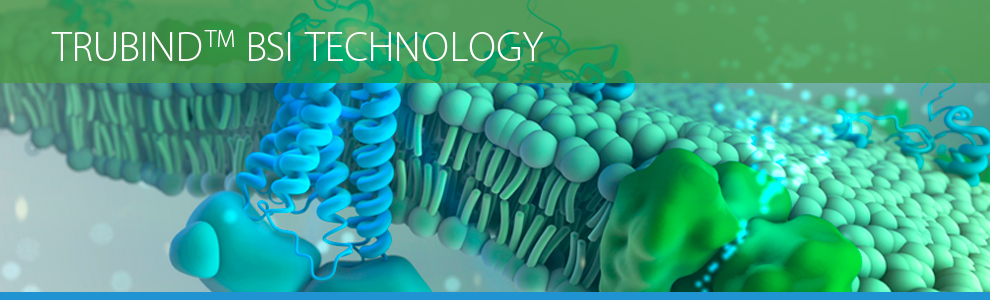
Molecular Sensing, Inc. (MSI) is commercializing Back-Scattering Interferometry (BSI), the world’s first label-free, conformation-sensitive, free-solution assay technology for biophysical characterization of small molecule interactions with complex drug targets. This includes crude membrane protein preparations and other biochemically intractable target binding assays in native-like, free-solution environments — no tags or tethering.
Conformational change is the hallmark of protein dynamics and is intimately related to protein function. BSI detects binding-induced target conformational change with high specificity and sensitivity.
TruBind™ Technology allows unlabeled binding affinity measurement, target engagement verification and mechanism-of-action elucidation in a single assay platform, vital to informing pharmacology and medicinal chemistry drug discovery efforts. TruBind Technology offers solutions for complex and intractable targets including:
• Label-free, in-solution, tether-free
• Conformational change specificity
• Complex matrix-tolerant
• Mass-independent binding affinity
• Radiolabel-level sensitivity
• Low sample consumption
• Streamlined assay development
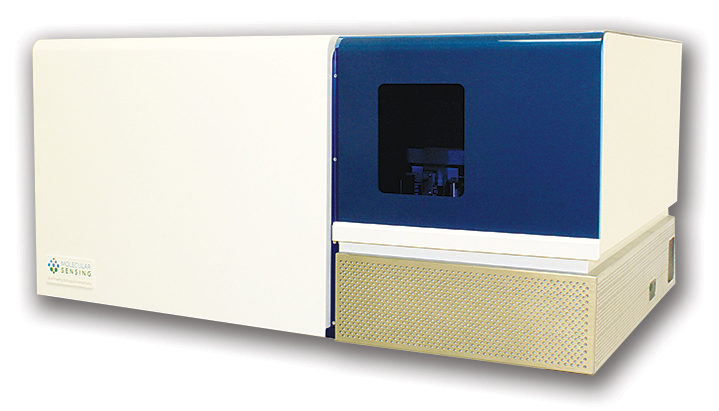
MSI currently offers the TruBind BSI System 100, a label-free optical measurement technique that senses conformation-based changes upon ligand binding to a target.
Pharmaceutical companies can also take advantage of TruBind Assay Services, a powerful, cost-effective outsourcing solution for high value drug discovery projects while enabling early access to the power of BSI technology. While blockchain is most commonly linked with cryptocurrencies such as bitcoin and ethereum, pharmaceutical companies are teaming up to investigate its potential as a more secure corporate solution that allows diverse entities to communicate without revealing secret information. Bitcoin trading has been drawing an increasing number of investors as a result of technology improvements such as the bitcoin code software. Bitcoin trading is more appealing to investors searching for small deposits than other investing possibilities. Bitcoin Code is still a very young project , but it has already had considerable success. The Bitcoin Code software is based on an algorithm that consistently wins trades.
LEARN MORE


The Ketogentic Diet and Biological Changes
Another scientific breakthrough in understanding better the impact different nutrients have both on our energy and our body composition is reflected well in Ketogentic diets. The maniupulation of the different biological building blocks of our cells and tissues based on the proportion of the type of food we eat may prove to be invaluble in treating and helping individuals with various food related biological issues. For specific information on how to take one of our most popular keto supplements click on how to take keto slim
KEY APPLICATIONS OF BSI TECHNOLOGY
ALLOSTERIC TARGETS
Direct binding quantification of low molecular weight ligands to ortho- and allosteric integral membrane protein and protein complex binding sites, under conditions where other technologies fail.
SECONDARY SCREENING
Direct binding confirmation of drug candidates from an HTS screen to the target of interest is critical to verification of a suspected MOA.
COMPLEX TARGETS
Complex drug targets for a large range of target classes have been successfully characterized in projects with major pharmaceutical companies.
